Cormorant
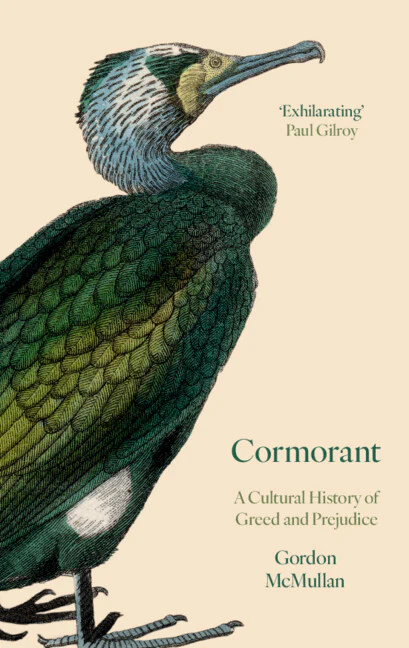
How does prejudice grow and mutate? What does intolerance, when transferred from human beings onto animals, do to those creatures? And what, in return, does it do to us? Cormorant is the gripping story of a 'greedy' bird hated across the world, the object of global conflict between the fishing industry on the one hand and environmental science on the other. Gordon McMullan's book reveals that cormorants have been loathed for centuries, a detestation that has metamorphosed over time. Drawing on fields which include literature, art history and zoology, and ranging from America to China and from Britain to Peru, Cormorant explores racism, xenophobia and capitalism through the remarkable story of a bird. McMullan argues that if in the present we are to recognize prejudicial attitudes towards animals and our fellow human beings, then we need to look to the past to understand how those viewpoints have taken hold.
- Does for academic study of the cormorant what Stephen Gregory's prizewinning horror novel did for cormorant fiction: will be similarly influential and impactful
- Fascinating historical comparison of the abhorred satanic cormorant and the saintlike, Christlike pelican will be of interest to anyone interested in ornithology
- A powerful, passionately argued refutation of racism and prejudice conducted through the attractive prism of literary, animal, and environmental studies
- Shows how humanities study can have vital, practical value to the sciences
How does prejudice grow and mutate? What does intolerance, when transferred from human beings onto animals, do to those creatures? And what, in return, does it do to us? Cormorant is the gripping story of a 'greedy' bird hated across the world, the object of global conflict between the fishing industry on the one hand and environmental science on the other. Gordon McMullan's book reveals that cormorants have been loathed for centuries, a detestation that has metamorphosed over time. Drawing on fields which include literature, art history and zoology, and ranging from America to China and from Britain to Peru, Cormorant explores racism, xenophobia and capitalism through the remarkable story of a bird. McMullan argues that if in the present we are to recognize prejudicial attitudes towards animals and our fellow human beings, then we need to look to the past to understand how those viewpoints have taken hold.
- Does for academic study of the cormorant what Stephen Gregory's prizewinning horror novel did for cormorant fiction: will be similarly influential and impactful
- Fascinating historical comparison of the abhorred satanic cormorant and the saintlike, Christlike pelican will be of interest to anyone interested in ornithology
- A powerful, passionately argued refutation of racism and prejudice conducted through the attractive prism of literary, animal, and environmental studies
- Shows how humanities study can have vital, practical value to the sciences
Description
How does prejudice grow and mutate? What does intolerance, when transferred from human beings onto animals, do to those creatures? And what, in return, does it do to us? Cormorant is the gripping story of a 'greedy' bird hated across the world, the object of global conflict between the fishing industry on the one hand and environmental science on the other. Gordon McMullan's book reveals that cormorants have been loathed for centuries, a detestation that has metamorphosed over time. Drawing on fields which include literature, art history and zoology, and ranging from America to China and from Britain to Peru, Cormorant explores racism, xenophobia and capitalism through the remarkable story of a bird. McMullan argues that if in the present we are to recognize prejudicial attitudes towards animals and our fellow human beings, then we need to look to the past to understand how those viewpoints have taken hold.
- Does for academic study of the cormorant what Stephen Gregory's prizewinning horror novel did for cormorant fiction: will be similarly influential and impactful
- Fascinating historical comparison of the abhorred satanic cormorant and the saintlike, Christlike pelican will be of interest to anyone interested in ornithology
- A powerful, passionately argued refutation of racism and prejudice conducted through the attractive prism of literary, animal, and environmental studies
- Shows how humanities study can have vital, practical value to the sciences