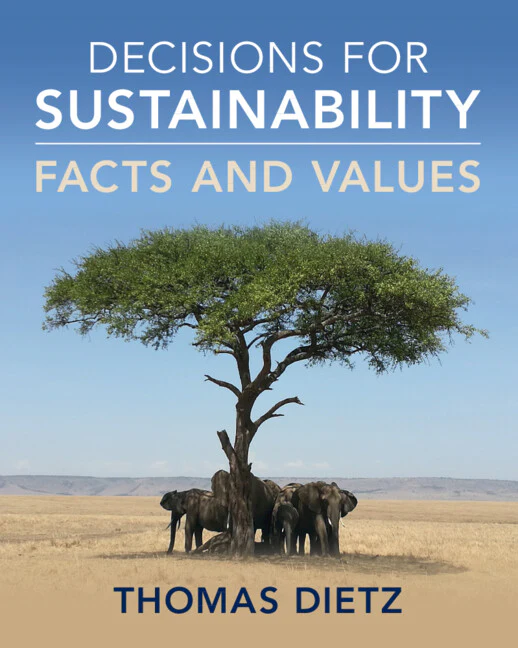
Decisions for Sustainability
Decisions by individuals, organisations, and nations shape the well-being of humans and other species, the environment, and sustainability. Decisions for Sustainability examines how we can make better decisions concerning our future. It incorporates sociological, psychological, and economic perspectives to highlight our strengths and weaknesses in decision-making, and suggest strategies to influence both individual and societal decisions. Sustainability challenges – from local land use and toxic contamination to climate change and biodiversity loss – illustrate how we can improve decision making and what factors lead to conflict. How we use science in the face of uncertainty is also examined, and a range of ethical criteria for good decisions are proposed. Emphasizing the need for diversity in decision making and clarifying the relationship between reform and societal transformation, this book provides a comprehensive view of what we know about decision-making, and how we can do better in the face of sustainability challenges.
- Draws on multiple disciplines including sociology, social and cognitive psychology, and economics to give robust and effective guidance on better decision making in sustainability
- Analyzes the strengths and limits of science in establishing facts, especially the relationship between values and science, to improve processes for making decisions in the face of uncertainty and conflict
- Describes the criteria for making good decisions on sustainability, allowing for more effective policies and better programs
- Assesses the ways of influencing both individual and collective decision-making on sustainability
Decisions by individuals, organisations, and nations shape the well-being of humans and other species, the environment, and sustainability. Decisions for Sustainability examines how we can make better decisions concerning our future. It incorporates sociological, psychological, and economic perspectives to highlight our strengths and weaknesses in decision-making, and suggest strategies to influence both individual and societal decisions. Sustainability challenges – from local land use and toxic contamination to climate change and biodiversity loss – illustrate how we can improve decision making and what factors lead to conflict. How we use science in the face of uncertainty is also examined, and a range of ethical criteria for good decisions are proposed. Emphasizing the need for diversity in decision making and clarifying the relationship between reform and societal transformation, this book provides a comprehensive view of what we know about decision-making, and how we can do better in the face of sustainability challenges.
- Draws on multiple disciplines including sociology, social and cognitive psychology, and economics to give robust and effective guidance on better decision making in sustainability
- Analyzes the strengths and limits of science in establishing facts, especially the relationship between values and science, to improve processes for making decisions in the face of uncertainty and conflict
- Describes the criteria for making good decisions on sustainability, allowing for more effective policies and better programs
- Assesses the ways of influencing both individual and collective decision-making on sustainability
Description
Decisions by individuals, organisations, and nations shape the well-being of humans and other species, the environment, and sustainability. Decisions for Sustainability examines how we can make better decisions concerning our future. It incorporates sociological, psychological, and economic perspectives to highlight our strengths and weaknesses in decision-making, and suggest strategies to influence both individual and societal decisions. Sustainability challenges – from local land use and toxic contamination to climate change and biodiversity loss – illustrate how we can improve decision making and what factors lead to conflict. How we use science in the face of uncertainty is also examined, and a range of ethical criteria for good decisions are proposed. Emphasizing the need for diversity in decision making and clarifying the relationship between reform and societal transformation, this book provides a comprehensive view of what we know about decision-making, and how we can do better in the face of sustainability challenges.
- Draws on multiple disciplines including sociology, social and cognitive psychology, and economics to give robust and effective guidance on better decision making in sustainability
- Analyzes the strengths and limits of science in establishing facts, especially the relationship between values and science, to improve processes for making decisions in the face of uncertainty and conflict
- Describes the criteria for making good decisions on sustainability, allowing for more effective policies and better programs
- Assesses the ways of influencing both individual and collective decision-making on sustainability