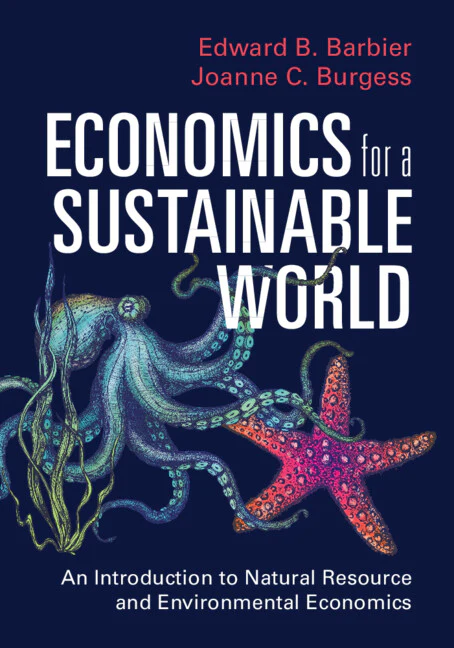
Economics for a Sustainable World
Written for undergraduate students with little or no exposure to economics, this introductory textbook offers a new perspective on environmental economics for the 21st century. It explains how economics for a sustainable world requires a new approach: accepting that the economy is intrinsically dependent on nature. Drawing on up-to-date case studies from around the globe, the book examines how economic concepts and techniques can apply to a wide range of environmental challenges while ensuring that poor and vulnerable members of society are included in progress toward sustainable development. The book also addresses current environmental policy options and innovations at the local, regional, and international levels. Chapters cover key topics such as climate change, pollution, energy, minerals, forests, land use, oceans, biodiversity, and water scarcity. Included in the book are the following pedagogical features: learning objectives, boxed examples, discussion questions, lists of further resources, and a glossary.
- Builds a core understanding of key economic concepts and techniques before applying these to specific environmental problems, making this an ideal textbook for students with little to no economics background
- Addresses current environmental policy solutions and innovations, providing students with a solid understanding of how natural resource and environmental economics affects their lives and careers
- Takes a global focus with case studies and examples from across the world, making sure students have a contemporary view of the challenges posed by environmental risks and ecological scarcities
- Carefully designed and organized so instructors can select which chapters to cover depending on the focus of their course and their students' prior knowledge of economics
Written for undergraduate students with little or no exposure to economics, this introductory textbook offers a new perspective on environmental economics for the 21st century. It explains how economics for a sustainable world requires a new approach: accepting that the economy is intrinsically dependent on nature. Drawing on up-to-date case studies from around the globe, the book examines how economic concepts and techniques can apply to a wide range of environmental challenges while ensuring that poor and vulnerable members of society are included in progress toward sustainable development. The book also addresses current environmental policy options and innovations at the local, regional, and international levels. Chapters cover key topics such as climate change, pollution, energy, minerals, forests, land use, oceans, biodiversity, and water scarcity. Included in the book are the following pedagogical features: learning objectives, boxed examples, discussion questions, lists of further resources, and a glossary.
- Builds a core understanding of key economic concepts and techniques before applying these to specific environmental problems, making this an ideal textbook for students with little to no economics background
- Addresses current environmental policy solutions and innovations, providing students with a solid understanding of how natural resource and environmental economics affects their lives and careers
- Takes a global focus with case studies and examples from across the world, making sure students have a contemporary view of the challenges posed by environmental risks and ecological scarcities
- Carefully designed and organized so instructors can select which chapters to cover depending on the focus of their course and their students' prior knowledge of economics
Description
Written for undergraduate students with little or no exposure to economics, this introductory textbook offers a new perspective on environmental economics for the 21st century. It explains how economics for a sustainable world requires a new approach: accepting that the economy is intrinsically dependent on nature. Drawing on up-to-date case studies from around the globe, the book examines how economic concepts and techniques can apply to a wide range of environmental challenges while ensuring that poor and vulnerable members of society are included in progress toward sustainable development. The book also addresses current environmental policy options and innovations at the local, regional, and international levels. Chapters cover key topics such as climate change, pollution, energy, minerals, forests, land use, oceans, biodiversity, and water scarcity. Included in the book are the following pedagogical features: learning objectives, boxed examples, discussion questions, lists of further resources, and a glossary.
- Builds a core understanding of key economic concepts and techniques before applying these to specific environmental problems, making this an ideal textbook for students with little to no economics background
- Addresses current environmental policy solutions and innovations, providing students with a solid understanding of how natural resource and environmental economics affects their lives and careers
- Takes a global focus with case studies and examples from across the world, making sure students have a contemporary view of the challenges posed by environmental risks and ecological scarcities
- Carefully designed and organized so instructors can select which chapters to cover depending on the focus of their course and their students' prior knowledge of economics