How the World Became a Book in Shakespeare's England
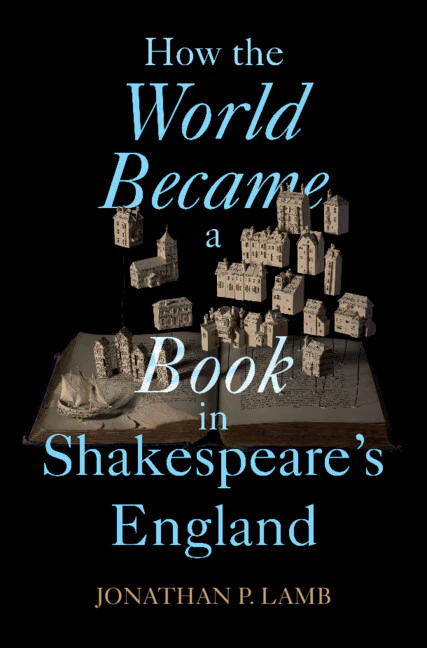
Human beings build their worlds using metaphors. Just as computer technology has inaugurated a massive metaphorical transformation in the present era, in which we can 'reboot' social causes or 'program' human behaviour, books spawned new metaphorical worlds in the newly print-savvy early modern England. Pamphleteers appealed to books to stage political attacks, preachers formulated theological claims using metaphors of page and binding, and scientists claimed to leaf through the 'Book of Nature'. Jonathan P. Lamb shows how, far from offering a mere a linguistic tool, this astonishingly broad lexicon did no less than teach entire cultures how to imagine, giving early modern writers – from Shakespeare to Cavendish, and from the famous to the anonymous – the language to describe and reshape the worlds around them. He reveals how, at a scale beyond anything scholars have imagined, bookish language shaped religious, political, racial, scientific, and literary questions that remain alive today.
- Makes a complex history accessible to readers from a range of backgrounds, convincingly showing how books shaped the English cultural imagination over the course of the sixteenth and seventeenth centuries and highlighting the relationship between that history and the present
- Draws on thousands of examples collected using digital research methods, thereby modelling those same methods for advanced students and making a huge amount of the English cultural record available, including a range of non-canonical and lesser-known writings
- Overturns common narratives around books and the printing press, approaching the premodern past without assuming everything points to a nascent modernity and offering readers a sense of the urgency around studying premodern English culture as a way of coming to terms with postmodern society
Human beings build their worlds using metaphors. Just as computer technology has inaugurated a massive metaphorical transformation in the present era, in which we can 'reboot' social causes or 'program' human behaviour, books spawned new metaphorical worlds in the newly print-savvy early modern England. Pamphleteers appealed to books to stage political attacks, preachers formulated theological claims using metaphors of page and binding, and scientists claimed to leaf through the 'Book of Nature'. Jonathan P. Lamb shows how, far from offering a mere a linguistic tool, this astonishingly broad lexicon did no less than teach entire cultures how to imagine, giving early modern writers – from Shakespeare to Cavendish, and from the famous to the anonymous – the language to describe and reshape the worlds around them. He reveals how, at a scale beyond anything scholars have imagined, bookish language shaped religious, political, racial, scientific, and literary questions that remain alive today.
- Makes a complex history accessible to readers from a range of backgrounds, convincingly showing how books shaped the English cultural imagination over the course of the sixteenth and seventeenth centuries and highlighting the relationship between that history and the present
- Draws on thousands of examples collected using digital research methods, thereby modelling those same methods for advanced students and making a huge amount of the English cultural record available, including a range of non-canonical and lesser-known writings
- Overturns common narratives around books and the printing press, approaching the premodern past without assuming everything points to a nascent modernity and offering readers a sense of the urgency around studying premodern English culture as a way of coming to terms with postmodern society
Original: $47.37
-65%$47.37
$16.58Description
Human beings build their worlds using metaphors. Just as computer technology has inaugurated a massive metaphorical transformation in the present era, in which we can 'reboot' social causes or 'program' human behaviour, books spawned new metaphorical worlds in the newly print-savvy early modern England. Pamphleteers appealed to books to stage political attacks, preachers formulated theological claims using metaphors of page and binding, and scientists claimed to leaf through the 'Book of Nature'. Jonathan P. Lamb shows how, far from offering a mere a linguistic tool, this astonishingly broad lexicon did no less than teach entire cultures how to imagine, giving early modern writers – from Shakespeare to Cavendish, and from the famous to the anonymous – the language to describe and reshape the worlds around them. He reveals how, at a scale beyond anything scholars have imagined, bookish language shaped religious, political, racial, scientific, and literary questions that remain alive today.
- Makes a complex history accessible to readers from a range of backgrounds, convincingly showing how books shaped the English cultural imagination over the course of the sixteenth and seventeenth centuries and highlighting the relationship between that history and the present
- Draws on thousands of examples collected using digital research methods, thereby modelling those same methods for advanced students and making a huge amount of the English cultural record available, including a range of non-canonical and lesser-known writings
- Overturns common narratives around books and the printing press, approaching the premodern past without assuming everything points to a nascent modernity and offering readers a sense of the urgency around studying premodern English culture as a way of coming to terms with postmodern society