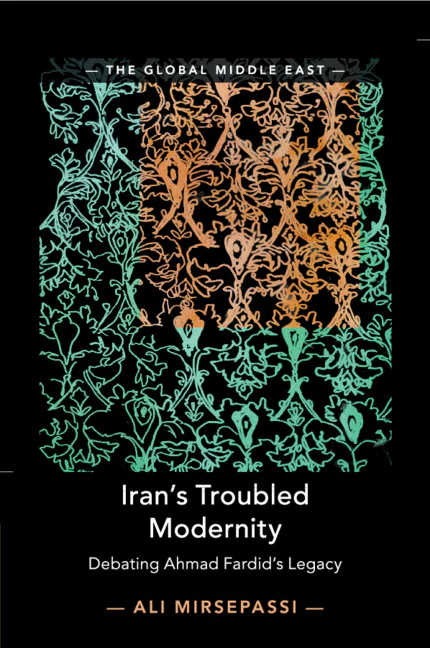
Iran's Troubled Modernity
Ahmad Fardid (1910–94), the 'anti-Western' philosopher known to many as the Iranian Heidegger, became the self-proclaimed philosophical spokesperson for the Islamic Republic, famously coining the term 'Westoxication'. Using new materials about Fardid's intellectual biography and interviews with thirteen individuals, Ali Mirsepassi pieces together the striking story of Fardid's life and intellectual legacy. Each interview in turn sheds light on Iran's twentieth-century intellectual and political self-construction and highlights Fardid's important role and influence in the creation of Iranian modernity. The Fardid phenomenon was unique to the Iranian story, and yet contributed to a broader twentieth-century Heideggerian tradition that marked the political destiny of other countries under a similar ideological sway. Through these accounts, Mirsepassi cuts to the nerve of how deadly political 'authenticity movements' take hold of modern societies and spread their ideology. Combining a sociological framework with the realities of lived experience, he examines Iran's recent and astonishing upheavals, experiments, and mass mobilizations.
- Contains detailed new research into the colourful life and times of Ahmad Fardid
- Uses thirteen extensive interviews to relate the story and provide a conversational quality to the narrative
- Presents an extensive study of anti-orientalist discourse and its relationship with the formation of the Islamic Republic
Ahmad Fardid (1910–94), the 'anti-Western' philosopher known to many as the Iranian Heidegger, became the self-proclaimed philosophical spokesperson for the Islamic Republic, famously coining the term 'Westoxication'. Using new materials about Fardid's intellectual biography and interviews with thirteen individuals, Ali Mirsepassi pieces together the striking story of Fardid's life and intellectual legacy. Each interview in turn sheds light on Iran's twentieth-century intellectual and political self-construction and highlights Fardid's important role and influence in the creation of Iranian modernity. The Fardid phenomenon was unique to the Iranian story, and yet contributed to a broader twentieth-century Heideggerian tradition that marked the political destiny of other countries under a similar ideological sway. Through these accounts, Mirsepassi cuts to the nerve of how deadly political 'authenticity movements' take hold of modern societies and spread their ideology. Combining a sociological framework with the realities of lived experience, he examines Iran's recent and astonishing upheavals, experiments, and mass mobilizations.
- Contains detailed new research into the colourful life and times of Ahmad Fardid
- Uses thirteen extensive interviews to relate the story and provide a conversational quality to the narrative
- Presents an extensive study of anti-orientalist discourse and its relationship with the formation of the Islamic Republic
Original: $51.43
-65%$51.43
$18.00Description
Ahmad Fardid (1910–94), the 'anti-Western' philosopher known to many as the Iranian Heidegger, became the self-proclaimed philosophical spokesperson for the Islamic Republic, famously coining the term 'Westoxication'. Using new materials about Fardid's intellectual biography and interviews with thirteen individuals, Ali Mirsepassi pieces together the striking story of Fardid's life and intellectual legacy. Each interview in turn sheds light on Iran's twentieth-century intellectual and political self-construction and highlights Fardid's important role and influence in the creation of Iranian modernity. The Fardid phenomenon was unique to the Iranian story, and yet contributed to a broader twentieth-century Heideggerian tradition that marked the political destiny of other countries under a similar ideological sway. Through these accounts, Mirsepassi cuts to the nerve of how deadly political 'authenticity movements' take hold of modern societies and spread their ideology. Combining a sociological framework with the realities of lived experience, he examines Iran's recent and astonishing upheavals, experiments, and mass mobilizations.
- Contains detailed new research into the colourful life and times of Ahmad Fardid
- Uses thirteen extensive interviews to relate the story and provide a conversational quality to the narrative
- Presents an extensive study of anti-orientalist discourse and its relationship with the formation of the Islamic Republic