SALE Between Greece and Babylonia
This book is unused and unread. It has some cosmetic imperfections such as scuffing, creasing or fading. It might be stamped 'damaged'.
This book cannot be discounted further.
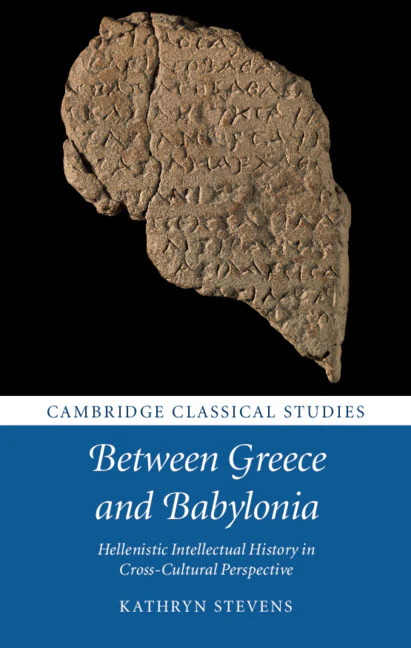
This book argues for a new approach to the intellectual history of the Hellenistic world. Despite the intense cross-cultural interactions which characterised the period after Alexander, studies of 'Hellenistic' intellectual life have tended to focus on Greek scholars and institutions. Where cross-cultural connections have been drawn, it is through borrowing: the Greek adoption of Babylonian astrology; the Egyptian scholar Manetho deploying Greek historiographical models. In this book, however, Kathryn Stevens advances a 'Hellenistic intellectual history' which is cross-cultural in scope and goes beyond borrowing and influence. Drawing on a wide range of Greek and Akkadian sources, she argues that intellectual life in the Greek world and Babylonia can be linked not just through occasional contact and influence, but also by deeper parallels in intellectual culture that reflect their integration into the same overarching imperial system. Tracing such parallels yields intellectual history which is diverse, multipolar and, therefore, truly 'Hellenistic'.
- Adopts a new, cross-cultural approach to Hellenistic intellectual history, bringing classical and Near Eastern perspectives together
- Introduces lesser-known contexts and bodies of material as well as those from well-known centres like Alexandria and Pergamon
- Takes a broad and strongly contextualised view of 'intellectual activity' and 'intellectual history' which is not specific to one discipline and not confined to the history of ideas
This book is unused and unread. It has some cosmetic imperfections such as scuffing, creasing or fading. It might be stamped 'damaged'.
This book cannot be discounted further.
This book argues for a new approach to the intellectual history of the Hellenistic world. Despite the intense cross-cultural interactions which characterised the period after Alexander, studies of 'Hellenistic' intellectual life have tended to focus on Greek scholars and institutions. Where cross-cultural connections have been drawn, it is through borrowing: the Greek adoption of Babylonian astrology; the Egyptian scholar Manetho deploying Greek historiographical models. In this book, however, Kathryn Stevens advances a 'Hellenistic intellectual history' which is cross-cultural in scope and goes beyond borrowing and influence. Drawing on a wide range of Greek and Akkadian sources, she argues that intellectual life in the Greek world and Babylonia can be linked not just through occasional contact and influence, but also by deeper parallels in intellectual culture that reflect their integration into the same overarching imperial system. Tracing such parallels yields intellectual history which is diverse, multipolar and, therefore, truly 'Hellenistic'.
- Adopts a new, cross-cultural approach to Hellenistic intellectual history, bringing classical and Near Eastern perspectives together
- Introduces lesser-known contexts and bodies of material as well as those from well-known centres like Alexandria and Pergamon
- Takes a broad and strongly contextualised view of 'intellectual activity' and 'intellectual history' which is not specific to one discipline and not confined to the history of ideas
Original: $69.30
-65%$69.30
$24.25Description
This book is unused and unread. It has some cosmetic imperfections such as scuffing, creasing or fading. It might be stamped 'damaged'.
This book cannot be discounted further.
This book argues for a new approach to the intellectual history of the Hellenistic world. Despite the intense cross-cultural interactions which characterised the period after Alexander, studies of 'Hellenistic' intellectual life have tended to focus on Greek scholars and institutions. Where cross-cultural connections have been drawn, it is through borrowing: the Greek adoption of Babylonian astrology; the Egyptian scholar Manetho deploying Greek historiographical models. In this book, however, Kathryn Stevens advances a 'Hellenistic intellectual history' which is cross-cultural in scope and goes beyond borrowing and influence. Drawing on a wide range of Greek and Akkadian sources, she argues that intellectual life in the Greek world and Babylonia can be linked not just through occasional contact and influence, but also by deeper parallels in intellectual culture that reflect their integration into the same overarching imperial system. Tracing such parallels yields intellectual history which is diverse, multipolar and, therefore, truly 'Hellenistic'.
- Adopts a new, cross-cultural approach to Hellenistic intellectual history, bringing classical and Near Eastern perspectives together
- Introduces lesser-known contexts and bodies of material as well as those from well-known centres like Alexandria and Pergamon
- Takes a broad and strongly contextualised view of 'intellectual activity' and 'intellectual history' which is not specific to one discipline and not confined to the history of ideas