SALE Britten's Unquiet Pasts
This book is unused and unread. It may have minor cosmetic imperfections such as scuffing, creasing or fading.
This book cannot be discounted further.
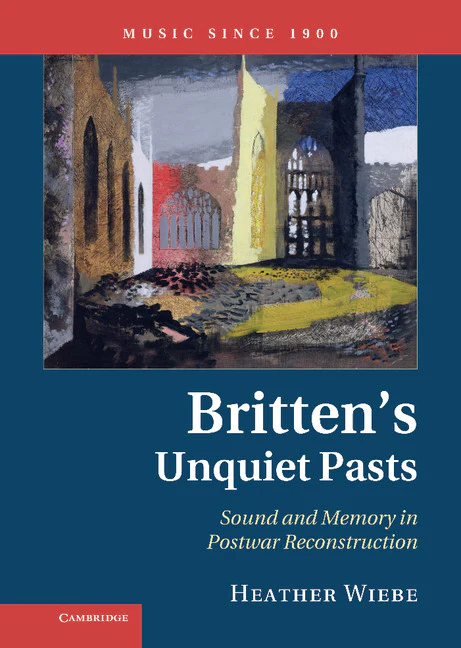
Examining the intersections between musical culture and a British project of reconstruction from the 1940s to the early 1960s, this study asks how gestures toward the past negotiated issues of recovery and renewal. In the wake of the Second World War, music became a privileged site for re-enchanting notions of history and community, but musical recourse to the past also raised issues of mourning and loss. How was sound figured as a historical object and as a locus of memory and magic? Wiebe addresses this question using a wide range of sources, from planning documents to journalism, public ceremonial and literature. Its central focus, however, is a set of works by Benjamin Britten that engaged both with the distant musical past and with key episodes of postwar reconstruction, including the Festival of Britain, the Coronation of Elizabeth II and the rebuilding of Coventry Cathedral.
- Proposes new ways of understanding uses of the national past in mid-century modernity
- Reveals relationships between Britten's music, arts institutions and the pressing social and cultural issues of postwar Britain
- Provides an account of music's importance in the early welfare state to give a new perspective on the arts in Britain and the role of public funding
This book is unused and unread. It may have minor cosmetic imperfections such as scuffing, creasing or fading.
This book cannot be discounted further.
Examining the intersections between musical culture and a British project of reconstruction from the 1940s to the early 1960s, this study asks how gestures toward the past negotiated issues of recovery and renewal. In the wake of the Second World War, music became a privileged site for re-enchanting notions of history and community, but musical recourse to the past also raised issues of mourning and loss. How was sound figured as a historical object and as a locus of memory and magic? Wiebe addresses this question using a wide range of sources, from planning documents to journalism, public ceremonial and literature. Its central focus, however, is a set of works by Benjamin Britten that engaged both with the distant musical past and with key episodes of postwar reconstruction, including the Festival of Britain, the Coronation of Elizabeth II and the rebuilding of Coventry Cathedral.
- Proposes new ways of understanding uses of the national past in mid-century modernity
- Reveals relationships between Britten's music, arts institutions and the pressing social and cultural issues of postwar Britain
- Provides an account of music's importance in the early welfare state to give a new perspective on the arts in Britain and the role of public funding
Original: $95.42
-65%$95.42
$33.40Description
This book is unused and unread. It may have minor cosmetic imperfections such as scuffing, creasing or fading.
This book cannot be discounted further.
Examining the intersections between musical culture and a British project of reconstruction from the 1940s to the early 1960s, this study asks how gestures toward the past negotiated issues of recovery and renewal. In the wake of the Second World War, music became a privileged site for re-enchanting notions of history and community, but musical recourse to the past also raised issues of mourning and loss. How was sound figured as a historical object and as a locus of memory and magic? Wiebe addresses this question using a wide range of sources, from planning documents to journalism, public ceremonial and literature. Its central focus, however, is a set of works by Benjamin Britten that engaged both with the distant musical past and with key episodes of postwar reconstruction, including the Festival of Britain, the Coronation of Elizabeth II and the rebuilding of Coventry Cathedral.
- Proposes new ways of understanding uses of the national past in mid-century modernity
- Reveals relationships between Britten's music, arts institutions and the pressing social and cultural issues of postwar Britain
- Provides an account of music's importance in the early welfare state to give a new perspective on the arts in Britain and the role of public funding