SALE Conversation Analysis
This book is unused and unread. It has some cosmetic imperfections such as scuffing, creasing or fading. It might be stamped 'damaged'.
This book cannot be discounted further.
We live our lives in conversation, building families, societies and civilisations. In over seven thousand languages across the world, the basic infrastructure by which we communicate remains the same. This is the first ever book-length linguistic introduction to conversation analysis (CA), the field that has done more than any other to illuminate the mechanics of interaction. Starting by locating CA by reference to a number of cognate disciplines investigating language in use, it provides an overview of the origins and methodology of CA. By using conversational data from a range of languages, it examines the basic apparatus of sequence organisation: turn-taking, preference, identity construction and repair. As the basis for these investigations, the book uses the twin analytic resources of action and sequence to throw new light on the origins and nature of language use.
- Provides data and reported research on a wide range of languages, allowing students from a range of linguistic backgrounds to access and relate to the material
- Gives a detailed explanation of transcriptional methods, enabling students to conduct their own analysis
- Assembles the various elements of interaction into a one-stop resource
This book is unused and unread. It has some cosmetic imperfections such as scuffing, creasing or fading. It might be stamped 'damaged'.
This book cannot be discounted further.
We live our lives in conversation, building families, societies and civilisations. In over seven thousand languages across the world, the basic infrastructure by which we communicate remains the same. This is the first ever book-length linguistic introduction to conversation analysis (CA), the field that has done more than any other to illuminate the mechanics of interaction. Starting by locating CA by reference to a number of cognate disciplines investigating language in use, it provides an overview of the origins and methodology of CA. By using conversational data from a range of languages, it examines the basic apparatus of sequence organisation: turn-taking, preference, identity construction and repair. As the basis for these investigations, the book uses the twin analytic resources of action and sequence to throw new light on the origins and nature of language use.
- Provides data and reported research on a wide range of languages, allowing students from a range of linguistic backgrounds to access and relate to the material
- Gives a detailed explanation of transcriptional methods, enabling students to conduct their own analysis
- Assembles the various elements of interaction into a one-stop resource
Original: $59.28
-65%$59.28
$20.75Description
This book is unused and unread. It has some cosmetic imperfections such as scuffing, creasing or fading. It might be stamped 'damaged'.
This book cannot be discounted further.
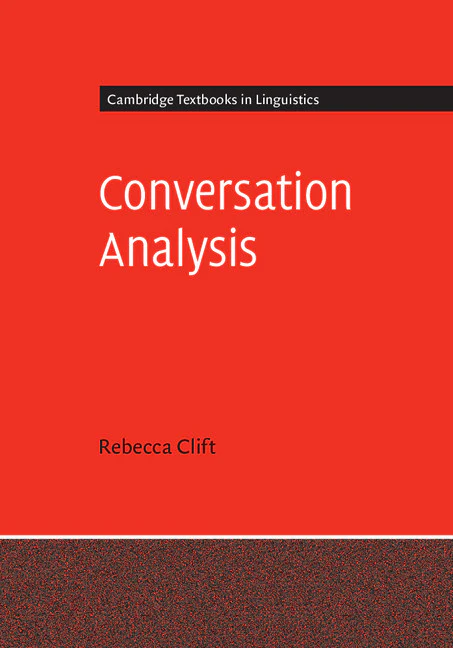
We live our lives in conversation, building families, societies and civilisations. In over seven thousand languages across the world, the basic infrastructure by which we communicate remains the same. This is the first ever book-length linguistic introduction to conversation analysis (CA), the field that has done more than any other to illuminate the mechanics of interaction. Starting by locating CA by reference to a number of cognate disciplines investigating language in use, it provides an overview of the origins and methodology of CA. By using conversational data from a range of languages, it examines the basic apparatus of sequence organisation: turn-taking, preference, identity construction and repair. As the basis for these investigations, the book uses the twin analytic resources of action and sequence to throw new light on the origins and nature of language use.
- Provides data and reported research on a wide range of languages, allowing students from a range of linguistic backgrounds to access and relate to the material
- Gives a detailed explanation of transcriptional methods, enabling students to conduct their own analysis
- Assembles the various elements of interaction into a one-stop resource