SALE Paul and Judaism at the End of History
This book is unused and unread. It has some cosmetic imperfections such as scuffing, creasing or fading. It's stamped 'damaged'.
This book cannot be discounted further.
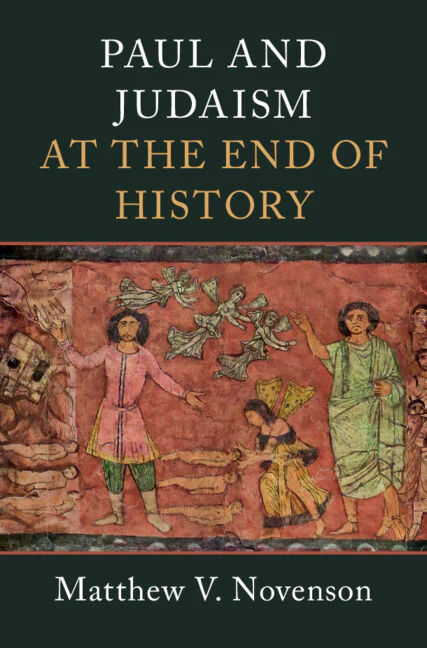
The apostle Paul was a Jew. He was born, lived, undertook his apostolic work, and died within the milieu of ancient Judaism. And yet, many readers have found, and continue to find, Paul's thought so radical, so Christian, even so anti-Jewish – despite the fact that it, too, is Jewish through and through. This paradox, and the question how we are to explain it, are the foci of Matthew Novenson's groundbreaking book. The solution, says the author, lies in Paul's particular understanding of time. This too is altogether Jewish, with the twist that Paul sees the end of history as present, not future. In the wake of Christ's resurrection, Jews are perfected in righteousness and – like the angels – enabled to live forever, in fulfilment of God's ancient promises to the patriarchs. What is more, gentiles are included in the same pneumatic existence promised to the Jews. This peculiar combination of ethnicity and eschatology yields something that looks not quite like Judaism or Christianity as we are used to thinking of them.
- Offers an innovative reconciliation of Paul's Jewish identity and Christian thought
- Focuses closely on Paul's particular understanding of time to draw out the different aspects of his beliefs
- Integrates the letters of Paul into the long history of Jewish mysticism and eschatology
This book is unused and unread. It has some cosmetic imperfections such as scuffing, creasing or fading. It's stamped 'damaged'.
This book cannot be discounted further.
The apostle Paul was a Jew. He was born, lived, undertook his apostolic work, and died within the milieu of ancient Judaism. And yet, many readers have found, and continue to find, Paul's thought so radical, so Christian, even so anti-Jewish – despite the fact that it, too, is Jewish through and through. This paradox, and the question how we are to explain it, are the foci of Matthew Novenson's groundbreaking book. The solution, says the author, lies in Paul's particular understanding of time. This too is altogether Jewish, with the twist that Paul sees the end of history as present, not future. In the wake of Christ's resurrection, Jews are perfected in righteousness and – like the angels – enabled to live forever, in fulfilment of God's ancient promises to the patriarchs. What is more, gentiles are included in the same pneumatic existence promised to the Jews. This peculiar combination of ethnicity and eschatology yields something that looks not quite like Judaism or Christianity as we are used to thinking of them.
- Offers an innovative reconciliation of Paul's Jewish identity and Christian thought
- Focuses closely on Paul's particular understanding of time to draw out the different aspects of his beliefs
- Integrates the letters of Paul into the long history of Jewish mysticism and eschatology
Description
This book is unused and unread. It has some cosmetic imperfections such as scuffing, creasing or fading. It's stamped 'damaged'.
This book cannot be discounted further.
The apostle Paul was a Jew. He was born, lived, undertook his apostolic work, and died within the milieu of ancient Judaism. And yet, many readers have found, and continue to find, Paul's thought so radical, so Christian, even so anti-Jewish – despite the fact that it, too, is Jewish through and through. This paradox, and the question how we are to explain it, are the foci of Matthew Novenson's groundbreaking book. The solution, says the author, lies in Paul's particular understanding of time. This too is altogether Jewish, with the twist that Paul sees the end of history as present, not future. In the wake of Christ's resurrection, Jews are perfected in righteousness and – like the angels – enabled to live forever, in fulfilment of God's ancient promises to the patriarchs. What is more, gentiles are included in the same pneumatic existence promised to the Jews. This peculiar combination of ethnicity and eschatology yields something that looks not quite like Judaism or Christianity as we are used to thinking of them.
- Offers an innovative reconciliation of Paul's Jewish identity and Christian thought
- Focuses closely on Paul's particular understanding of time to draw out the different aspects of his beliefs
- Integrates the letters of Paul into the long history of Jewish mysticism and eschatology