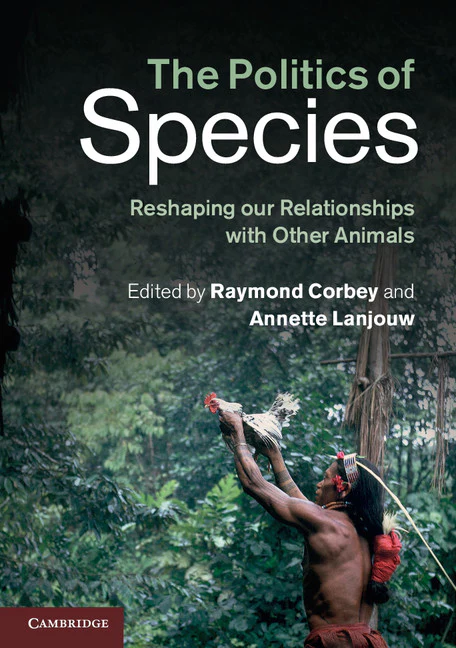
SALE The Politics of Species
This book is unused and unread. It has some cosmetic imperfections such as scuffing, creasing or fading.
This book cannot be discounted further and it is stamped 'damaged'.
The assumption that humans are cognitively and morally superior to other animals is fundamental to social democracies and legal systems worldwide. It legitimises treating members of other animal species as inferior to humans. The last few decades have seen a growing awareness of this issue, as evidence continues to show that individuals of many other species have rich mental, emotional and social lives. Bringing together leading experts from a range of disciplines, this volume identifies the key barriers to a definition of moral respect that includes nonhuman animals. It sets out to increase concern, empathy and inclusiveness by developing strategies that can be used to protect other animals from exploitation in the wild and from suffering in captivity. The chapters link scientific data with normative and philosophical reflections, offering unique insight into controversial issues around the ethical, political and legal status of other species.
- Brings together leading experts from a range of disciplines who provide contextualized illustrations of a variety of human-nonhuman relationships
- Connects scientific data with normative and philosophical reflections, offering unique insight into the ethical, political and legal status of other species
- Identifies the key barriers to a definition of moral respect that includes nonhuman animals, setting out strategies for increasing concern, empathy and inclusiveness
This book is unused and unread. It has some cosmetic imperfections such as scuffing, creasing or fading.
This book cannot be discounted further and it is stamped 'damaged'.
The assumption that humans are cognitively and morally superior to other animals is fundamental to social democracies and legal systems worldwide. It legitimises treating members of other animal species as inferior to humans. The last few decades have seen a growing awareness of this issue, as evidence continues to show that individuals of many other species have rich mental, emotional and social lives. Bringing together leading experts from a range of disciplines, this volume identifies the key barriers to a definition of moral respect that includes nonhuman animals. It sets out to increase concern, empathy and inclusiveness by developing strategies that can be used to protect other animals from exploitation in the wild and from suffering in captivity. The chapters link scientific data with normative and philosophical reflections, offering unique insight into controversial issues around the ethical, political and legal status of other species.
- Brings together leading experts from a range of disciplines who provide contextualized illustrations of a variety of human-nonhuman relationships
- Connects scientific data with normative and philosophical reflections, offering unique insight into the ethical, political and legal status of other species
- Identifies the key barriers to a definition of moral respect that includes nonhuman animals, setting out strategies for increasing concern, empathy and inclusiveness
Original: $36.53
-65%$36.53
$12.79Description
This book is unused and unread. It has some cosmetic imperfections such as scuffing, creasing or fading.
This book cannot be discounted further and it is stamped 'damaged'.
The assumption that humans are cognitively and morally superior to other animals is fundamental to social democracies and legal systems worldwide. It legitimises treating members of other animal species as inferior to humans. The last few decades have seen a growing awareness of this issue, as evidence continues to show that individuals of many other species have rich mental, emotional and social lives. Bringing together leading experts from a range of disciplines, this volume identifies the key barriers to a definition of moral respect that includes nonhuman animals. It sets out to increase concern, empathy and inclusiveness by developing strategies that can be used to protect other animals from exploitation in the wild and from suffering in captivity. The chapters link scientific data with normative and philosophical reflections, offering unique insight into controversial issues around the ethical, political and legal status of other species.
- Brings together leading experts from a range of disciplines who provide contextualized illustrations of a variety of human-nonhuman relationships
- Connects scientific data with normative and philosophical reflections, offering unique insight into the ethical, political and legal status of other species
- Identifies the key barriers to a definition of moral respect that includes nonhuman animals, setting out strategies for increasing concern, empathy and inclusiveness