SALE The Politics of the First World War
This book is unused and unread. It has some cosmetic imperfections such as scuffing and creasing.
It may be stamped 'damaged'.
This book cannot be discounted further.
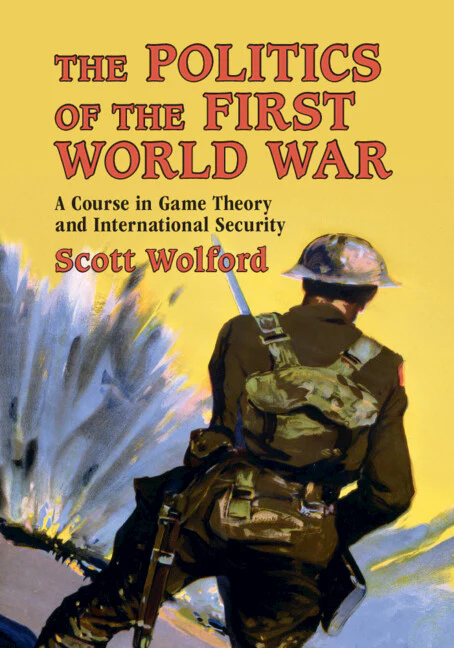
The Great War is an immense, confusing and overwhelming historical conflict - the ideal case study for teaching game theory and international relations. Using thirteen historical puzzles, from the outbreak of the war and the stability of attrition, to unrestricted submarine warfare and American entry into the war, this book provides students with a rigorous yet accessible training in game theory. Each chapter shows, through guided exercises, how game theoretical models can explain otherwise challenging strategic puzzles, shedding light on the role of individual leaders in world politics, cooperation between coalitions partners, the effectiveness of international law, the termination of conflict, and the challenges of making peace. Its analytical history of World War I also surveys cutting edge political science research on international relations and the causes of war. Written by a leading game theorist known for his expertise of the war, this textbook includes useful student features such as chapter key terms, contemporary maps, a timeline of events, a list of key characters and additional end-of-chapter game-theoretic exercises.
- Engages students with an interesting test case - World War I
- Ties the underlying narrative of the war to a primer on basic game theory, teaching students how to use models to resolve puzzles so that students learn the basics of game theory together with the analytical value of using it
- Uses simple math which is clearly explained with guided examples, benefiting those from non-technical backgrounds
- Teaches students how to build theories, better preparing them to conduct their own research
This book is unused and unread. It has some cosmetic imperfections such as scuffing and creasing.
It may be stamped 'damaged'.
This book cannot be discounted further.
The Great War is an immense, confusing and overwhelming historical conflict - the ideal case study for teaching game theory and international relations. Using thirteen historical puzzles, from the outbreak of the war and the stability of attrition, to unrestricted submarine warfare and American entry into the war, this book provides students with a rigorous yet accessible training in game theory. Each chapter shows, through guided exercises, how game theoretical models can explain otherwise challenging strategic puzzles, shedding light on the role of individual leaders in world politics, cooperation between coalitions partners, the effectiveness of international law, the termination of conflict, and the challenges of making peace. Its analytical history of World War I also surveys cutting edge political science research on international relations and the causes of war. Written by a leading game theorist known for his expertise of the war, this textbook includes useful student features such as chapter key terms, contemporary maps, a timeline of events, a list of key characters and additional end-of-chapter game-theoretic exercises.
- Engages students with an interesting test case - World War I
- Ties the underlying narrative of the war to a primer on basic game theory, teaching students how to use models to resolve puzzles so that students learn the basics of game theory together with the analytical value of using it
- Uses simple math which is clearly explained with guided examples, benefiting those from non-technical backgrounds
- Teaches students how to build theories, better preparing them to conduct their own research
Description
This book is unused and unread. It has some cosmetic imperfections such as scuffing and creasing.
It may be stamped 'damaged'.
This book cannot be discounted further.
The Great War is an immense, confusing and overwhelming historical conflict - the ideal case study for teaching game theory and international relations. Using thirteen historical puzzles, from the outbreak of the war and the stability of attrition, to unrestricted submarine warfare and American entry into the war, this book provides students with a rigorous yet accessible training in game theory. Each chapter shows, through guided exercises, how game theoretical models can explain otherwise challenging strategic puzzles, shedding light on the role of individual leaders in world politics, cooperation between coalitions partners, the effectiveness of international law, the termination of conflict, and the challenges of making peace. Its analytical history of World War I also surveys cutting edge political science research on international relations and the causes of war. Written by a leading game theorist known for his expertise of the war, this textbook includes useful student features such as chapter key terms, contemporary maps, a timeline of events, a list of key characters and additional end-of-chapter game-theoretic exercises.
- Engages students with an interesting test case - World War I
- Ties the underlying narrative of the war to a primer on basic game theory, teaching students how to use models to resolve puzzles so that students learn the basics of game theory together with the analytical value of using it
- Uses simple math which is clearly explained with guided examples, benefiting those from non-technical backgrounds
- Teaches students how to build theories, better preparing them to conduct their own research