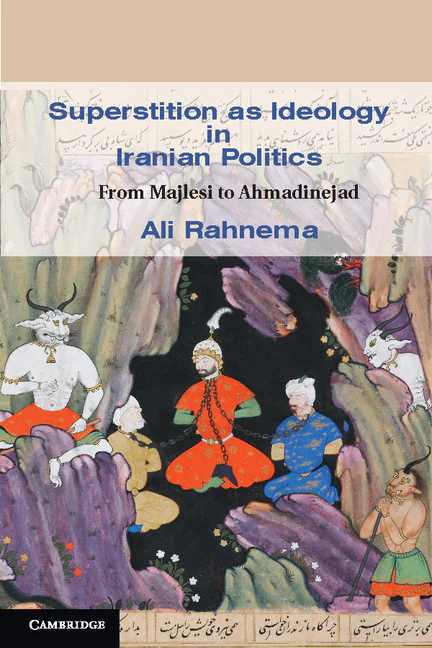
Superstition as Ideology in Iranian Politics
A superstitious reading of the world based on religion may be harmless at a private level, yet employed as a political tool it can have more sinister implications. As this fascinating book by Ali Rahnema, a distinguished Iranian intellectual, relates, superstition and mystical beliefs have endured and influenced ideology and political strategy in Iran from the founding of the Safavid dynasty in the sixteenth century to the present day. As Rahnema demonstrates through a close reading of the Persian sources and with examples from contemporary Iranian politics, it is this supposed connectedness to the hidden world that has allowed leaders such as Muhammad Reza Shah Pahlavi and Mahmud Ahmadinejad to present themselves and their entourage as representatives of the divine, and their rivals as the embodiment of evil.
- An eminent Iranian intellectual explores the revival of supernatural beliefs and anti-rationalism amongst leaders in modern Iran
- Based on Persian sources, the book affords a brilliant examination of the work and influence of the seventeenth-century Shi'i cleric, Majlesi
- An alternative perspective on modern Iran for students of the Middle East and religious studies
A superstitious reading of the world based on religion may be harmless at a private level, yet employed as a political tool it can have more sinister implications. As this fascinating book by Ali Rahnema, a distinguished Iranian intellectual, relates, superstition and mystical beliefs have endured and influenced ideology and political strategy in Iran from the founding of the Safavid dynasty in the sixteenth century to the present day. As Rahnema demonstrates through a close reading of the Persian sources and with examples from contemporary Iranian politics, it is this supposed connectedness to the hidden world that has allowed leaders such as Muhammad Reza Shah Pahlavi and Mahmud Ahmadinejad to present themselves and their entourage as representatives of the divine, and their rivals as the embodiment of evil.
- An eminent Iranian intellectual explores the revival of supernatural beliefs and anti-rationalism amongst leaders in modern Iran
- Based on Persian sources, the book affords a brilliant examination of the work and influence of the seventeenth-century Shi'i cleric, Majlesi
- An alternative perspective on modern Iran for students of the Middle East and religious studies
Original: $35.19
-65%$35.19
$12.32Description
A superstitious reading of the world based on religion may be harmless at a private level, yet employed as a political tool it can have more sinister implications. As this fascinating book by Ali Rahnema, a distinguished Iranian intellectual, relates, superstition and mystical beliefs have endured and influenced ideology and political strategy in Iran from the founding of the Safavid dynasty in the sixteenth century to the present day. As Rahnema demonstrates through a close reading of the Persian sources and with examples from contemporary Iranian politics, it is this supposed connectedness to the hidden world that has allowed leaders such as Muhammad Reza Shah Pahlavi and Mahmud Ahmadinejad to present themselves and their entourage as representatives of the divine, and their rivals as the embodiment of evil.
- An eminent Iranian intellectual explores the revival of supernatural beliefs and anti-rationalism amongst leaders in modern Iran
- Based on Persian sources, the book affords a brilliant examination of the work and influence of the seventeenth-century Shi'i cleric, Majlesi
- An alternative perspective on modern Iran for students of the Middle East and religious studies