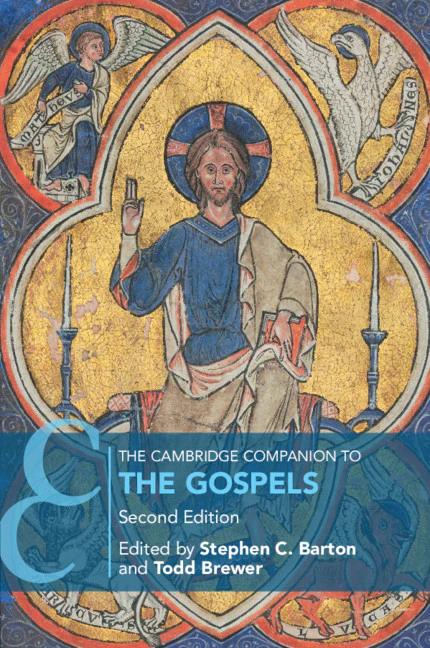
The Cambridge Companion to the Gospels
Throughout the history of Christianity, the four canonical gospels have proven to be vital resources for Christian thought and practice, and an inspiration for humanistic culture generally. Indeed, the gospels and their interpretation have had a profound impact on theology, philosophy, the sciences, ethics, worship, architecture, and the creative arts. Building on the strengths of the first edition, The Cambridge Companion to the Gospels, 2nd edition, takes account of new directions in gospels research, notably: the milieu in which the gospels were read, copied, and circulated alongside non-canonical gospels; renewed debates about the sources of the gospels and their interrelations; how central gospel themes are illuminated by a variety of critical approaches and theological readings; the reception of the gospels over time and in various media; and how the gospels give insight into the human condition.
- Offers a distinctive, multi-disciplinary approach to understanding the gospels which showcases new developments in gospels research
- Gives the most current account of scholarly interpretations of the gospels and how to interpret them
- Provides examples of the impact of the gospels through time in church, society and culture
Throughout the history of Christianity, the four canonical gospels have proven to be vital resources for Christian thought and practice, and an inspiration for humanistic culture generally. Indeed, the gospels and their interpretation have had a profound impact on theology, philosophy, the sciences, ethics, worship, architecture, and the creative arts. Building on the strengths of the first edition, The Cambridge Companion to the Gospels, 2nd edition, takes account of new directions in gospels research, notably: the milieu in which the gospels were read, copied, and circulated alongside non-canonical gospels; renewed debates about the sources of the gospels and their interrelations; how central gospel themes are illuminated by a variety of critical approaches and theological readings; the reception of the gospels over time and in various media; and how the gospels give insight into the human condition.
- Offers a distinctive, multi-disciplinary approach to understanding the gospels which showcases new developments in gospels research
- Gives the most current account of scholarly interpretations of the gospels and how to interpret them
- Provides examples of the impact of the gospels through time in church, society and culture
Description
Throughout the history of Christianity, the four canonical gospels have proven to be vital resources for Christian thought and practice, and an inspiration for humanistic culture generally. Indeed, the gospels and their interpretation have had a profound impact on theology, philosophy, the sciences, ethics, worship, architecture, and the creative arts. Building on the strengths of the first edition, The Cambridge Companion to the Gospels, 2nd edition, takes account of new directions in gospels research, notably: the milieu in which the gospels were read, copied, and circulated alongside non-canonical gospels; renewed debates about the sources of the gospels and their interrelations; how central gospel themes are illuminated by a variety of critical approaches and theological readings; the reception of the gospels over time and in various media; and how the gospels give insight into the human condition.
- Offers a distinctive, multi-disciplinary approach to understanding the gospels which showcases new developments in gospels research
- Gives the most current account of scholarly interpretations of the gospels and how to interpret them
- Provides examples of the impact of the gospels through time in church, society and culture