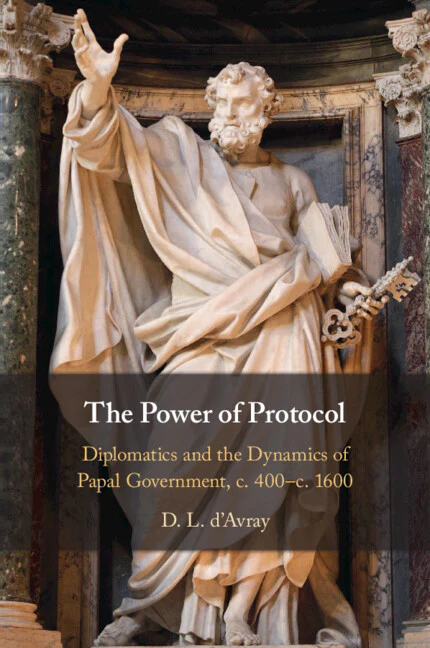
The Power of Protocol
How did the papacy govern European religious life without a proper bureaucracy and the normal resources of a state? From late Antiquity, papal responses were in demand. The 'apostolic see' took over from Roman emperors the discourse and demeanour of a religious ruler of the Latin world. Over the centuries, it acquired governmental authority analogous to that of a secular state – except that it lacked powers of physical enforcement, a solid financial base (aside from short periods) and a bureaucracy as defined by Max Weber. Through the discipline of Applied Diplomatics, which investigates the structures and settings of documents to solve substantive historical problems, The Power of Protocol explores how such a demand for papal services was met. It is about the genesis and structure of papal documents – a key to papal history generally – from the Roman empire to after the Council of Trent in the sixteenth century, and is the only book of its kind.
- Provides the expertise required to make sense of papal documents, from the Roman empire to after the Council of Trent in the sixteenth century
- Shows how the technical discipline of Diplomatics can explain how the papacy actually functioned
- Maps uncharted territory in the largely unexplored field of post-Trent papal Diplomatics
How did the papacy govern European religious life without a proper bureaucracy and the normal resources of a state? From late Antiquity, papal responses were in demand. The 'apostolic see' took over from Roman emperors the discourse and demeanour of a religious ruler of the Latin world. Over the centuries, it acquired governmental authority analogous to that of a secular state – except that it lacked powers of physical enforcement, a solid financial base (aside from short periods) and a bureaucracy as defined by Max Weber. Through the discipline of Applied Diplomatics, which investigates the structures and settings of documents to solve substantive historical problems, The Power of Protocol explores how such a demand for papal services was met. It is about the genesis and structure of papal documents – a key to papal history generally – from the Roman empire to after the Council of Trent in the sixteenth century, and is the only book of its kind.
- Provides the expertise required to make sense of papal documents, from the Roman empire to after the Council of Trent in the sixteenth century
- Shows how the technical discipline of Diplomatics can explain how the papacy actually functioned
- Maps uncharted territory in the largely unexplored field of post-Trent papal Diplomatics
Description
How did the papacy govern European religious life without a proper bureaucracy and the normal resources of a state? From late Antiquity, papal responses were in demand. The 'apostolic see' took over from Roman emperors the discourse and demeanour of a religious ruler of the Latin world. Over the centuries, it acquired governmental authority analogous to that of a secular state – except that it lacked powers of physical enforcement, a solid financial base (aside from short periods) and a bureaucracy as defined by Max Weber. Through the discipline of Applied Diplomatics, which investigates the structures and settings of documents to solve substantive historical problems, The Power of Protocol explores how such a demand for papal services was met. It is about the genesis and structure of papal documents – a key to papal history generally – from the Roman empire to after the Council of Trent in the sixteenth century, and is the only book of its kind.
- Provides the expertise required to make sense of papal documents, from the Roman empire to after the Council of Trent in the sixteenth century
- Shows how the technical discipline of Diplomatics can explain how the papacy actually functioned
- Maps uncharted territory in the largely unexplored field of post-Trent papal Diplomatics