War beyond Words: Languages of Remembrance from the Great War to the Present
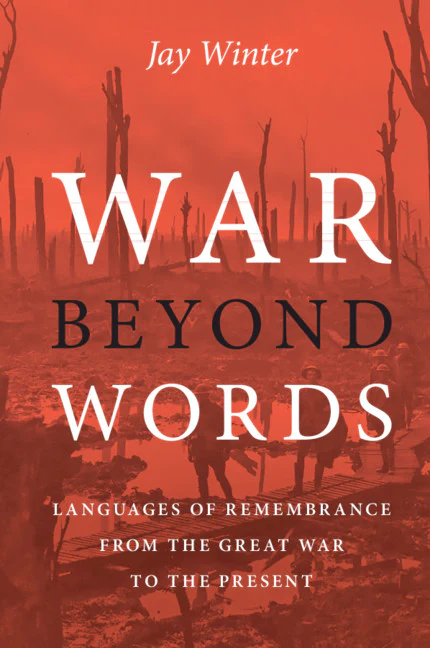
What we know of war is always mediated knowledge and feeling. We need lenses to filter out some of its blinding, terrifying light. These lenses are not fixed; they change over time, and Jay Winter's panoramic history of war and memory offers an unprecedented study of transformations in our imaginings of war, from 1914 to the present. He reveals the ways in which different creative arts have framed our meditations on war, from painting and sculpture to photography, film and poetry, and ultimately to silence, as a language of memory in its own right. He shows how these highly mediated images of war, in turn, circulate through language to constitute our 'cultural memory' of war. This is a major contribution to our understanding of the diverse ways in which men and women have wrestled with the intractable task of conveying what twentieth-century wars meant to them and mean to us.
- Proposes a unique view of the cultural consequences of war, avoiding the 'pacifist or patriot' approach to cultural history
- Provides a multi-disciplinary approach to landscapes of memory, emphasizing the significance of the visual frameworks in which war remembrance takes place
- Goes beyond the 'modernist-traditionalist' divide in interpretations of the cultural consequences of war in twentieth-century Europe
- Shows that as war mutates, so do the languages in which practices of commemoration are framed
What we know of war is always mediated knowledge and feeling. We need lenses to filter out some of its blinding, terrifying light. These lenses are not fixed; they change over time, and Jay Winter's panoramic history of war and memory offers an unprecedented study of transformations in our imaginings of war, from 1914 to the present. He reveals the ways in which different creative arts have framed our meditations on war, from painting and sculpture to photography, film and poetry, and ultimately to silence, as a language of memory in its own right. He shows how these highly mediated images of war, in turn, circulate through language to constitute our 'cultural memory' of war. This is a major contribution to our understanding of the diverse ways in which men and women have wrestled with the intractable task of conveying what twentieth-century wars meant to them and mean to us.
- Proposes a unique view of the cultural consequences of war, avoiding the 'pacifist or patriot' approach to cultural history
- Provides a multi-disciplinary approach to landscapes of memory, emphasizing the significance of the visual frameworks in which war remembrance takes place
- Goes beyond the 'modernist-traditionalist' divide in interpretations of the cultural consequences of war in twentieth-century Europe
- Shows that as war mutates, so do the languages in which practices of commemoration are framed
Original: $20.29
-65%$20.29
$7.10Description
What we know of war is always mediated knowledge and feeling. We need lenses to filter out some of its blinding, terrifying light. These lenses are not fixed; they change over time, and Jay Winter's panoramic history of war and memory offers an unprecedented study of transformations in our imaginings of war, from 1914 to the present. He reveals the ways in which different creative arts have framed our meditations on war, from painting and sculpture to photography, film and poetry, and ultimately to silence, as a language of memory in its own right. He shows how these highly mediated images of war, in turn, circulate through language to constitute our 'cultural memory' of war. This is a major contribution to our understanding of the diverse ways in which men and women have wrestled with the intractable task of conveying what twentieth-century wars meant to them and mean to us.
- Proposes a unique view of the cultural consequences of war, avoiding the 'pacifist or patriot' approach to cultural history
- Provides a multi-disciplinary approach to landscapes of memory, emphasizing the significance of the visual frameworks in which war remembrance takes place
- Goes beyond the 'modernist-traditionalist' divide in interpretations of the cultural consequences of war in twentieth-century Europe
- Shows that as war mutates, so do the languages in which practices of commemoration are framed